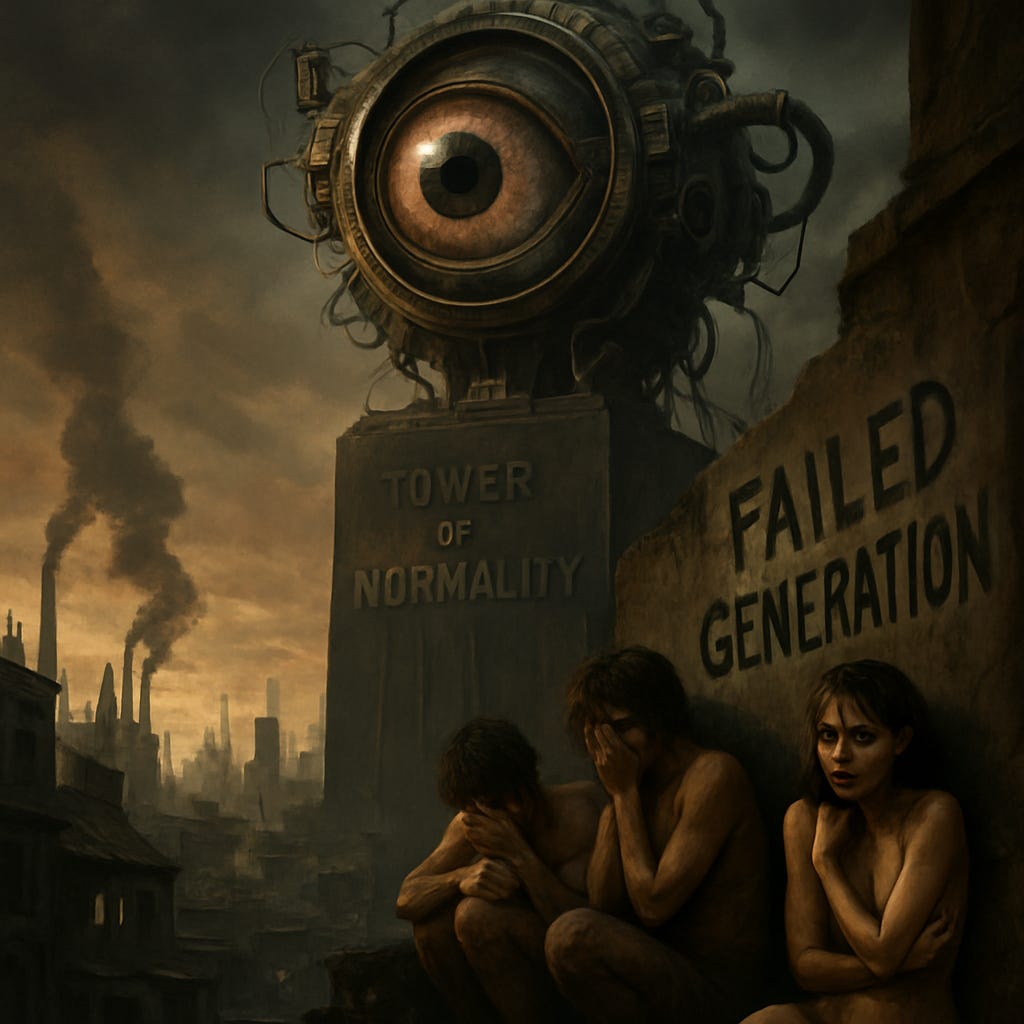
AI Isn't Making Us Stupid
But clinging to obsolete educational techniques is


In his study, AI Tools in Society: Impacts on Cognitive Offloading and the Future of Critical Thinking, Michael Gerlich investigated the relationship between AI usage and critical thinking scores among 666 UK participants distributed across three age groups and diverse educational backgrounds.
One notable finding was that younger participants exhibited greater reliance on AI tools and correspondingly lower critical thinking scores compared to older cohorts. Additionally, a positive correlation between educational attainment and critical thinking skills was reaffirmed.
However, these conclusions are not particularly groundbreaking. The assumption that younger generations would inherently outperform older generations in critical thinking tests, prior to widespread AI adoption, is questionable given traditional understandings of experiential wisdom.
Similarly, the link between higher education and stronger critical thinking abilities is unsurprising, as higher education explicitly emphasises the cultivation of these skills. The critical failing, therefore, lies in the insufficient prioritisation of critical thinking before university-level education.
Given these insights, the appropriate response is not to indulge in Luddite resistance against technological progress. Instead, it is to embrace the future by equipping forthcoming generations with a new educational model: Curriculum HUMANITAS.
The core premise is that AI-supported educational tools can present scholastic materials more effectively than traditional teaching methods. Education should prioritise the holistic development of human potential rather than rote memorisation and conformity.

Curriculum HUMANITAS would encompass several foundational courses designed to maximise individual and communal human potential:
Humanity 101: the fundamental characteristics of human nature; what distinguishes humans from other animals; examining universal human needs, motivations, and psychological frameworks.
Health Sciences 101: biology from a practical perspective; the benefits of physical activity; reproductive health; nutrition and culinary skills essential for personal well-being.
Community 101: the dynamics of successful communities; the importance of cooperative efforts; neighbourhood programs, community infrastructure, and the role of initiatives and funding opportunities.
Society 101: the roles played by bureaucracy, media, governance structures, the rule of law, manufacturing processes, and basic macroeconomic and business concepts.
Natural Integration 101: coexistence with nature through sustainable farming practices, renewable energy, awareness of natural ecosystems, climate change mitigation, food processing, and habitat preservation.
Money Management 101: handling finances wisely; avoiding exploitation by consumer capitalism; leveraging assets with an understanding of risk and sustainability; acquiring entrepreneurial and investment management skills.
AI Driven Research 101: big data analysis, referencing techniques, statistical and mathematical modelling, historical research, and leveraging AI tools for scholastic and creative purposes alike.
Communication 101: effective use of AI tools paired with traditional methods of communication to facilitate interactions with people, animals, businesses, and diverse organisational entities.
AI Communication 101: the creation, understanding, and refinement of prompts and digital contexts in an increasingly agentic, customisable, user-defined digital environment.
Critical thinking is not threatened by younger generations' reliance on AI. Rather, the true risk lies in adhering to outdated educational curricula while AI-based tools offer increasingly efficient and comprehensive means of accessing knowledge. As computational tools assume responsibilities previously undertaken by manual calculators, we move closer to a post-language society, at least in the sense that traditional linguistic barriers dividing understanding, perception, and reasoning might be bridged through AI.
Historically, lingua francas (simplified languages used primarily in trade and diplomacy) provided basic communication frameworks across diverse linguistic groups. Examples such as the Mediterranean lingua franca Sabir were characterised by their minimalism and pragmatic approach, often leading to miscommunication or misunderstandings due to their inherent limitations.
By contrast, modern Large Language Models (LLMs) offer unprecedented depth, nuance, and cultural sensitivity. They serve as advanced intermediaries capable of appreciating and bridging cultural nuances, resolving misunderstandings, facilitating meaningful intercultural dialogues, and potentially offering transparent arbitration superior to human judgment.
Expecting LLMs to inherently possess these sophisticated abilities without targeted development, however, is misguided. Critics of AI often paradoxically accuse the technology of being simultaneously superficial and dangerously powerful, suggesting it could either dull human intellect or catastrophically exceed human control.
That’s why AI belongs in education: not to replace critical thinking, but to sharpen it.